Level II: the Stele Building
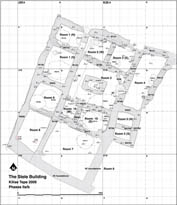
Plan of the Stele Building
Click the plan to enlarge
This building represents a new departure, with a completely different alignment and layout, approximately 18m square, with rooms arranged around a central space. In the 1990s we had fully exposed the IIc phase of the building and its dual functions of storage and cultic activity seem well established, with the stele and altar in the central space, and storage jars in some of the other rooms. Soundings below the floor had established that this IIc phase was a re-foundation of the building on very similar lines to its initial construction, but further work was needed to expose in detail the layout and occupation sequence of this original building. Our work in 2007-2009 has completed this task. It transpires that the overall plan with a central space was constant, but some of the longer rooms in the IIc phase correspond to two smaller rooms in the earlier plan. Clear evidence was recovered for a gradual rise in the floor levels of some rooms during the IIa/b phases, for the use of some rooms for storage, and for symbolic foundation deposits within the fabric of the building. This, therefore, reinforces our interpretation of the Stele Building's dual function, and helps with its chronology. Initial results from
14C analysis of well stratified samples from the early phases of the building tend to confirm our suspicions that the original foundation had taken place well before the events at the end of the Hittite empire, conventionally placed around 1190 BC.
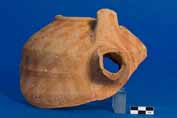
A jar with a spout
and a basket handle
An additional bonus of the further work in the Stele Building was the retrieval of a few ceramic vessels, including our first full profile of the large square-rimmed jars which now make their first appearance in the ceramic repertoire, in sharp contrast to the sober monochrome wares associated with
Level III. The red-painted patterns on these jars herald a much more diverse use of paint on other shapes. From the Stele Building itself comes a painted lid, and from a contemporary storage pit in the Western Courtyard a jar with spout and basket-handle.
Although first well described at Kilise Tepe, it now emerges that the red-painted jars are present at the major sites of Mersin and Tarsus on the Cilician coast, presumably also well before the fall of the empire around 1190 BC. This raises the question of what caused this change. At Kilise Tepe we have been inclined to associate it with a change in the political scene. The establishment of the semi-independent kingdom of Tarhuntassa would presumably have removed direct Hittite administration and military control from these territories, along with any material correlates, which could include the standardized ceramic repertoire.
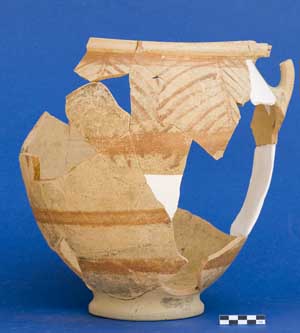
Red painted jar from Room 1
of the Stele Building (phase IIb)
It is therefore conceivable that the new architectural departure and the introduction of the red-painted ceramics are both associated with a new political order, which perhaps favoured local traditions or innovations in place of more standardized features emanating from the core of the empire. However, this may be hard to reconcile with the
14C evidence which suggests that the foundation of the Stele Building, and the new decorative style, may go back well into the 14th century.




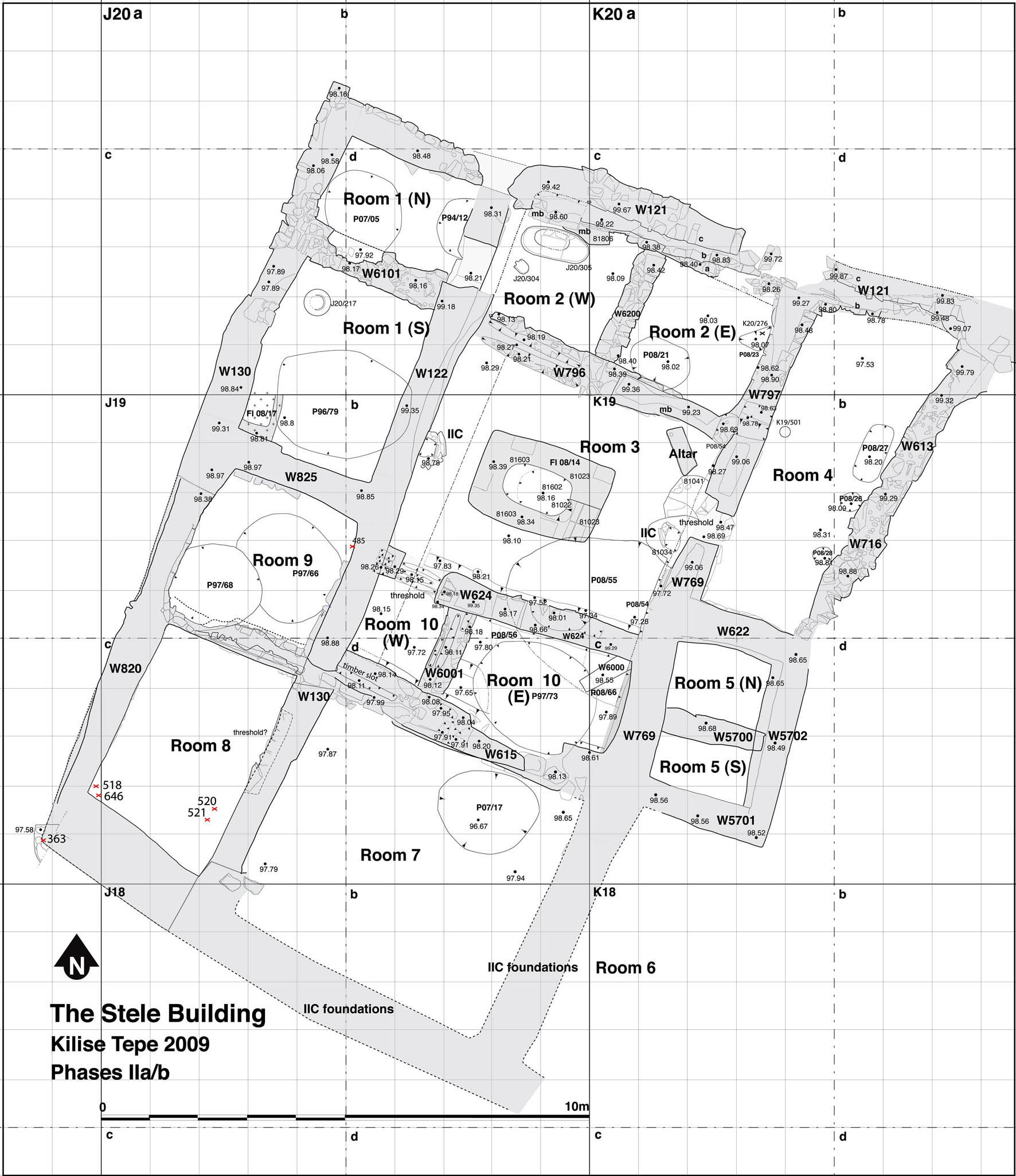 Plan of the Stele Building
  A jar with a spout
  Red painted jar from Room 1